










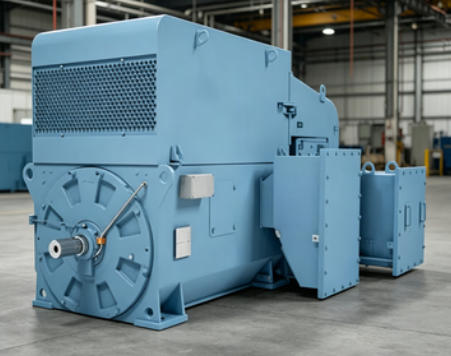
Advantages and Use of Medium-High Voltage Motors: An HV M Overview
While low-voltage motors are widely used in industrial applications, there are still many situations where higher voltages are required to meet performance, efficiency, and installation demands. HV M solutions are especially suitable for heavy-duty systems that cannot be efficiently served by standard low-voltage motors.
Voltage Classification
Definitions of low-voltage, medium-voltage, and high-voltage motors may vary. Some people consider any voltage above 1000 V to be high voltage. However, according to the IEC 60038 standard, low voltage is up to 1000 V, medium voltage ranges from 1000 V to 35 kV, and high voltage is above 35 kV. Motors designed for these higher ranges therefore fall into the medium- and high-voltage categories covered by HV M applications.
Cost and Efficiency Benefits
Medium- and high-voltage motors are particularly suitable for heavy-duty applications that require output power of 400 kW or more. By increasing the voltage, the operating current can be reduced, which allows the use of smaller distribution cables and significantly lowers cable costs. This advantage becomes even more obvious when cables must be laid over long distances, such as in tunnels, large plants, or remote industrial sites.
Typical Industries
HV M motors are especially suitable for industries that handle heavy loads and continuous operation. They are widely used in HVAC systems, industrial fans, screw compressors, pumps, and other large rotating equipment where reliability, efficiency, and stable power transmission are essential.
Insulation System
Medium-voltage motors use an improved insulation system designed for higher operating voltages. The stator windings are typically treated with a vacuum impregnation process, in which recesses are filled with varnish and corona-protection materials to reduce electrical wear. Creepage distances and air gaps between conductors and earth are also increased to improve insulation safety.
Unlike many low-voltage motors, medium-voltage motors usually do not use standard terminal connection plates. Instead, they are connected through high-voltage insulators to ensure safer and more reliable electrical connections.
Electrical and Thermal Life Testing
Higher voltage places greater demands on motor insulation and long-term reliability. Therefore, detailed documentation and strict testing are necessary for quality assurance. Medium-voltage motors should be tested for both electrical life and thermal life to verify that they can operate safely under continuous load.
Documentation is typically available for motors designed for a service life of at least 20,000 hours. When variable-speed operation is required, motors with insulated bearings can be used to reduce bearing currents, helping to extend service life and improve operational stability.
Installation and Authorization
Connecting low-voltage motors is relatively straightforward for most electricians, but medium- and high-voltage installations are more complex. Proper selection, cable sizing, termination, protection, and grounding require professional technical support.
Special authorization or qualified personnel may be required to install a medium-voltage motor and establish its electrical connection. Technical guidance is recommended when choosing the right motor type and designing the connection system, including clamps, cables, insulation coordination, and protection devices.
Voltage Level Management
Excessively high voltage can cause premature failure of electrical and electronic components, such as circuit boards, due to overheating. This type of damage is cumulative and irreversible. Motors, however, may sometimes tolerate slightly higher voltages because increased voltage reduces current, which can lower heat generation in the windings.
Low voltage is also a major cause of motor overheating and early failure. When the supply voltage is too low, the motor must draw additional current to deliver the required power, which increases winding temperature and accelerates insulation aging.
Poor voltage levels can damage both motors and control equipment. Long-term operating problems often indicate an underlying voltage issue, so voltage levels should be properly controlled and monitored. For further questions about medium- and high-voltage motors, HV M products are designed for demanding and extreme industrial requirements, offering efficient, robust, durable, and easy-to-maintain performance.
Related Posts

NORD UNIVERSAL SMI Worm Gearmotor (Low Voltage)
Jua 27, 2026
NORD MAXXDRIVE® Parallel Gear Unit (Standard Model)
Jua 26, 2026
SIEMENS Industrial Low-Voltage Helical Gearmotor
Jua 26, 2026