










What Is an AC Motor: Definition, Working Principle, and Main Parts
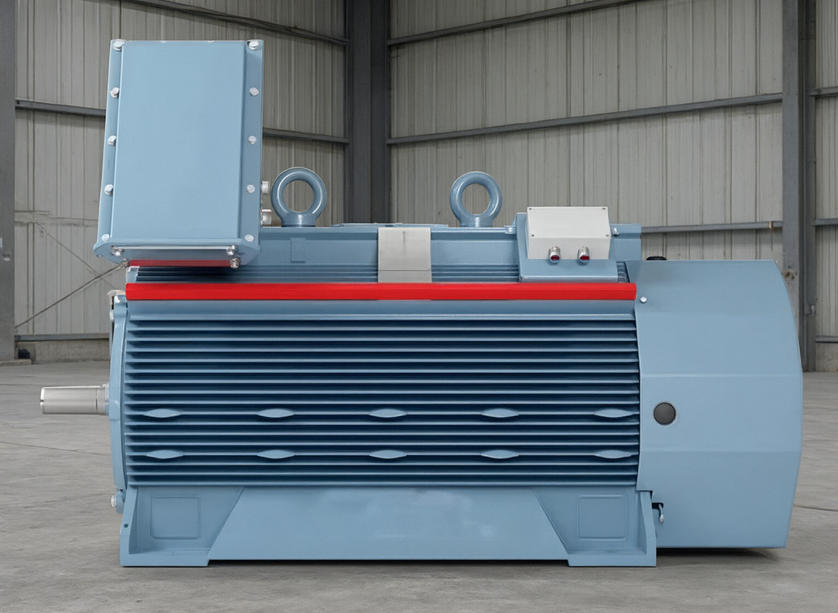
If you are wondering, "What is an AC motor?", the answer lies in its ability to convert electrical energy into mechanical motion. An AC (Alternating Current) motor is an essential piece of machinery used across various industrial, commercial, and residential applications.
At its core, the definition of an AC motor involves two main components:
- The Stator: The stationary outer part.
- The Rotor: The rotating inner part connected to the motor shaft.
- Both components generate rotating magnetic fields, which are fundamental to the motor's operation. The stator’s field is produced by alternating current flowing through its windings, creating the force necessary to spin the rotor.
How It Works: The Principles Behind the Answer to "What Is an AC Motor?"
To fully understand what an AC motor is, you must look at how the stator winding functions. It serves a dual purpose, acting as both the armature and the field winding.
When AC voltage is applied to the stator, it creates a rotating magnetic field that moves at a "synchronous speed." This field induces a voltage in the rotor windings. In most AC motors (specifically induction motors), this process generates torque through electromagnetic induction. The magnetic field from the stator induces current in the rotor, creating the torque that initiates rotation.
Types of AC Motors
When asking "What is an AC motor," it is important to note that they come in various designs tailored for specific uses. Common types include:
- Single-phase and Three-phase motors
- Synchronous and Asynchronous (Induction) motors
- Brake motors and Multi-speed motors
- The primary distinction often lies in the electrical supply:
- Residential applications typically use single-phase power.
- Industrial applications commonly use three-phase power.
Starting Methods
An AC motor can be started using various methods to control power supply, ensuring smooth startups and preventing damage. Common methods include:
- Contactor or Manual Starter: Allows simple on/off control or manual regulation via a switch.
- Star-Delta Starters: Initially connects windings in a "Star" (Y) configuration to reduce voltage and starting current, then switches to "Delta" (Δ) for full speed.
- Auto-Transformer Starter: Limits initial current by reducing voltage, allowing for adjustable torque and current settings.
- Rotor Impedance Starter: Connects to the rotor via slip rings; effective but often bulky and costly.
- Soft Starters: Provides a gradual start/stop to reduce mechanical stress and wear on equipment.
Key Components
To answer what an AC motor is structurally, we must examine its key parts:
1. The Stator
The stator generates the rotating magnetic field. It consists of a laminated metal core and coils of copper wire. In three-phase motors, these windings are positioned 120° apart to ensure smooth operation.
2. The Rotor
Unlike DC motors, the rotor in an AC motor usually receives power indirectly from the stator's magnetic field. There are two main types:
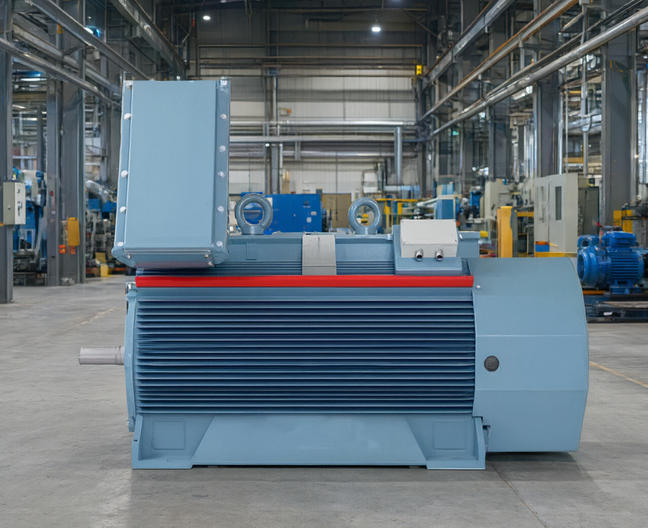
- Squirrel Cage Rotor: Composed of aluminum or copper bars and end rings. It relies on "slip" (a difference in speed between the rotor and the magnetic field) to induce current and generate motion.
- Wound Rotor (Slip Ring): Features a wound core connected to slip rings. This allows for precise control over speed and torque, making it ideal for applications requiring fine-tuning.
Conclusion
So, what is an AC motor? It is a versatile, reliable device that converts electrical energy into mechanical energy through electromagnetic induction. Whether utilizing a simple single-phase motor for home use or a robust three-phase induction motor for heavy industry, these machines are integral to modern machinery.
Sourcing Recommendation: The Y2 Series
For businesses looking to source high-quality AC motors, the Y2 series asynchronous motor offers exceptional value. Building on the reliable Y series foundation, the Y2 series is a fully enclosed, self-fan cooled squirrel cage three-phase motor (Center height H80-355mm).
It features:
- Higher Power & Starting Torque: Improved performance over previous generations.
- Enhanced Protection: Upgraded IP54 protection and F insulation class.
- Efficiency: Noise-reduced design and IC411 cooling method.
- Meeting IEC standard specifications, the Y2 series is a cost-effective, robust solution for bulk procurement in industrial and commercial operations.
Related Posts

NORD UNIVERSAL SMI Worm Gearmotor (Low Voltage)
Jua 27, 2026
NORD MAXXDRIVE® Parallel Gear Unit (Standard Model)
Jua 26, 2026
SIEMENS Industrial Low-Voltage Helical Gearmotor
Jua 26, 2026