










A Guide to Motor Energy Efficiency and Improvement Strategies
A motor is a machine that converts electrical energy into mechanical energy through the interaction between the magnetic field in its windings and electric current. (Conversely, a generator performs the reverse process, converting mechanical energy into electrical energy.) Electromagnetism is the fundamental phenomenon driving electric motors.
What Is Motor Energy Efficiency?
Motor energy efficiency is the primary metric used to describe a motor's performance. It is defined as the ratio of the motor's output power to its input power, typically expressed by the symbol "η". The formula is written as:
Motor Energy Efficiency (η) = Output Power / Input Power
or
η = Output Power / (Output Power + Losses)
Because no machine operates without losses, the output value of a motor is always less than its input value.
How to Improve Motor Energy Efficiency
During the conversion of electrical energy into mechanical energy, motors incur various losses, including resistive, mechanical (friction), core (magnetic dissipation), and material-dependent losses. Below are key strategies to enhance motor energy efficiency:
1. Optimized Heat Dissipation
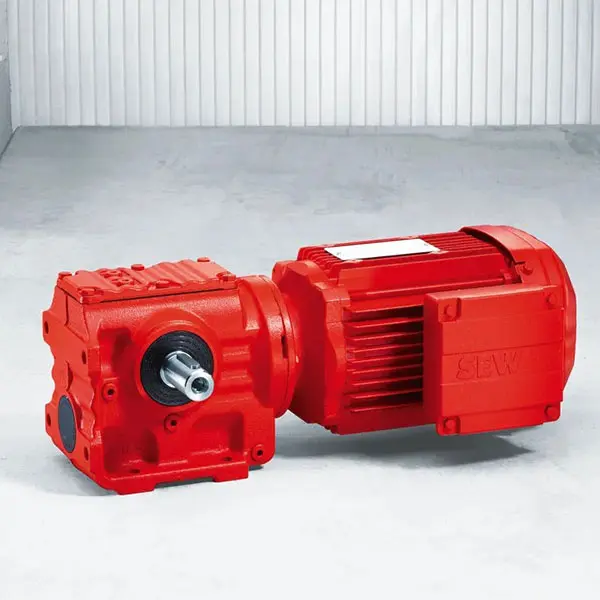
The motor frame provides mechanical protection for the windings and serves as the mounting interface. Crucially, it plays a vital role in thermal performance by transferring internally generated heat to the frame's surface. From there, air blown by a cooling fan promotes heat dissipation, effectively reducing thermal losses.
2. Stator Enhancements
The stator is responsible for approximately 60% of total motor losses. To minimize these resistive losses, the mass of the stator winding must be increased. High-efficiency motors typically contain 25% more copper than standard models, as the additional mass directly reduces electrical resistance.
3. Rotor Improvements
Rotor losses are a secondary source of inefficiency, primarily caused by the motor's slip. To reduce these losses, slip must be minimized by increasing the rotor's electrical conductivity. Utilizing large quantities of copper is ideal due to its high conductivity, and modern die-casting processes now make copper rotors highly feasible.
4. Proper Lubrication
Mechanical losses from friction can be mitigated through proper lubrication. The lubrication interval depends on the motor's rated speed, bearing size, grease type, and temperature rise. Care must be taken when applying lubricants; mixing different types of grease can severely degrade the performance of Permanent Magnet (PM) motors.
5. Advanced Laminations (Stacked Sheets)
Core losses caused by hysteresis and steel saturation can be significantly reduced by using silicon steel instead of low-cost carbon steel in the laminations. Furthermore, minimizing flux density and core losses can be achieved by decreasing the thickness of the laminations while increasing their overall length.
Related Posts

NORD UNIVERSAL SMI Worm Gearmotor (Low Voltage)
Jua 27, 2026
NORD MAXXDRIVE® Parallel Gear Unit (Standard Model)
Jua 26, 2026
SIEMENS Industrial Low-Voltage Helical Gearmotor
Jua 26, 2026