










Understanding the Energy Efficiency of Motors and Effective Ways to Improve It
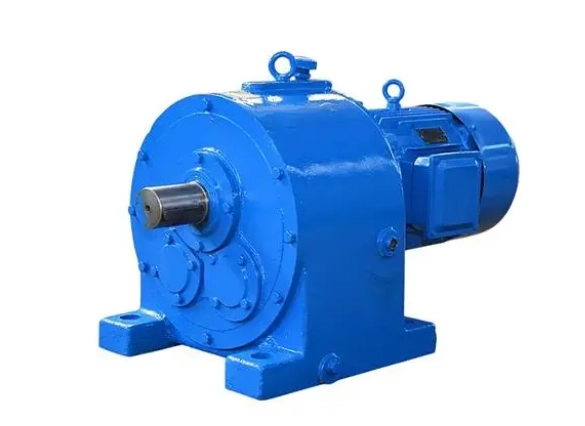
A motor is a machine that generates internal forces through the interaction between winding‑produced magnetic fields and electric current, converting electrical energy into mechanical energy. When this process runs in reverse, mechanical energy turns into electrical energy — this is the working principle of a generator. Electromagnetism serves as the core physical principle behind all electric motors.
What Is the Energy Efficiency of Motors
Motor efficiency, denoted by the symbol η, refers to the ratio of a motor’s output power to its input power. This metric characterizes a motor’s operational performance, calculated as the ratio of shaft output power against input power:
Motor energy efficiency = motor output power / motor input power
Or expressed in formula:
η = Output / (Output + Losses)
Zero‑loss machinery does not exist in practice. For this reason, a motor’s output power is always lower than its input power.
How to Improve the Energy Efficiency of Motors
Electric motors produce multiple types of losses while converting electrical energy to mechanical energy, including resistive losses, friction‑induced mechanical losses, magnetic core dissipation losses, and material‑dependent miscellaneous losses. Below are practical technical approaches to boost the energy efficiency of motors.
Heat Dissipation
The motor housing delivers mechanical protection for internal windings and provides mounting bases for equipment installation. Critically, it dominates thermal performance: it conducts internally‑generated heat out to the housing surface, where airflow from the cooling fan dissipates heat into ambient air, cutting thermal losses of the motor.
Stator Optimization
As a key component of large synchronous motors, the stator accounts for roughly 60 % of total motor losses. Enlarging the mass of stator windings lowers winding resistance to curb such losses. High‑energy‑efficiency motors adopt approximately 25 % more copper material than standard‑efficiency counterparts.
Rotor Optimization
Rotor losses represent secondary power losses, mostly associated with motor slip. Reducing slip helps mitigate rotor losses, which can be realized by lifting the rotor’s electrical conductivity. Copper, featuring superior conductivity, is adopted in large quantities; modern die‑casting technologies enable mass production of die‑cast copper rotors.
Proper Lubrication
Lubrication service intervals are determined by motor rated speed, bearing dimension, grease grade and temperature rise. Operators shall exercise caution in lubricant selection and application. Never mix different grease formulations, even for greases with similar elemental composition. Incompatible mixed grease will directly degrade motor performance, especially for permanent‑magnet motors.
Laminated Core Sheets
Replace low‑cost carbon steel with silicon‑alloy steel laminations to suppress hysteresis loss and steel saturation effects, so as to reduce core losses. Further minimization of magnetic flux density and core losses can be achieved by thinning lamination sheets and extending lamination overall length.
Related Posts

NORD UNIVERSAL SMI Worm Gearmotor (Low Voltage)
Jua 27, 2026
NORD MAXXDRIVE® Parallel Gear Unit (Standard Model)
Jua 26, 2026
SIEMENS Industrial Low-Voltage Helical Gearmotor
Jua 26, 2026