










Efficiency Motors: What They Are and How to Improve Them
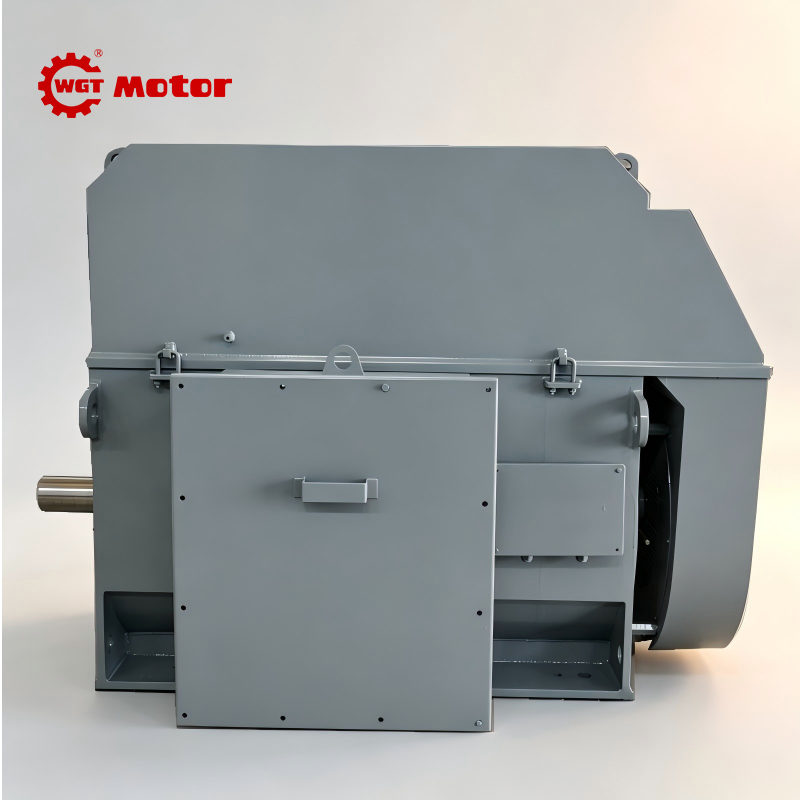
A motor is a machine that utilizes the interaction between the magnetic field in its windings and electric current to generate force, converting electrical energy into mechanical energy. If this process is reversed, mechanical energy is converted into electrical energy, which is the function of a generator. Electromagnetism is the primary phenomenon driving electric motors.
What Is Motor Efficiency?
The ratio of a motor's output to its input is called efficiency, represented by the symbol "η". This factor describes the overall performance of the motor. It is the ratio between the output power and the input power on the shaft, expressed as:
There is no such thing as a machine without losses. Therefore, the output value of a machine is always less than the input value.
️ How to Improve Efficiency Motors
Electric motors incur losses during the conversion of electrical energy into mechanical energy. These include resistive losses, mechanical losses due to friction, losses from the dissipation of magnetic energy in the core, and various other losses depending on the materials used. The following techniques can be used to improve the efficiency factor of efficiency motors.
1. Heat Dissipation
The function of the motor frame is to provide mechanical protection for the windings and serve as the interface for mounting feet. The motor frame plays a vital role in thermal performance, as it is responsible for transferring the heat generated inside the motor to the surface of the frame. Here, air blown by the fan promotes heat dissipation, effectively reducing heat loss.
2. Stator Optimization
The stator, the main component of a synchronous motor, is responsible for 60% of the losses. To reduce these losses, the mass of the stator winding must be kept large, as increased mass reduces resistance. High efficiency motors contain 25% extra copper compared to motors designed for standard efficiency models.
3. Rotor Improvements
Rotor losses are considered a secondary source of loss, caused primarily by the degree of slip displayed by the motor. To reduce these losses, the slip must be minimized by increasing the electrical conductivity of the rotor. Copper must be used in large quantities due to its high electrical conductivity. Additionally, the copper must be die-cast, as modern processes have been developed specifically for die-casting copper.
4. Proper Lubrication
The lubrication interval is a function of the rated speed of the motor installation, the bearing size, the type of grease, and the temperature rise. Therefore, care must be taken when applying lubricant. Do not mix grease types, even if they share the same elements. Using an incorrect type of grease in the application will directly affect the performance of the PM motor.
5. Stacked Sheets
To reduce the effects of hysteresis and saturated steel, use steel with a small amount of silicon in the laminations instead of low-cost carbon steel. In this way, core losses can be significantly reduced. Furthermore, flux density and core losses can be minimized by reducing the thickness of the laminations and increasing the length of the laminations.
Related Posts

NORD UNIVERSAL SMI Worm Gearmotor (Low Voltage)
Jua 27, 2026
NORD MAXXDRIVE® Parallel Gear Unit (Standard Model)
Jua 26, 2026
SIEMENS Industrial Low-Voltage Helical Gearmotor
Jua 26, 2026