











Types of AC Motors: Working Principles and Key Components
AC motor types represent essential machinery deployed across industrial, commercial, and residential scenarios. Each type relies on two core assemblies: the stator, the stationary outer assembly, and the rotor, the rotating inner assembly coupled to the motor shaft. Both assemblies produce rotating magnetic fields, which underpin motor operation. The stator’s rotating magnetic field is generated by alternating current (AC) passing through its windings.
Within different AC motor types, the stator winding fulfills dual roles, acting as both armature and field winding. Once AC voltage is applied to the stator, a rotating magnetic field spinning at synchronous speed is created. This field induces voltage in stator and rotor windings alike to enable motor operation.
Types of AC Motors
Various AC motor types are engineered for distinct operating scenarios. Major categories cover single‑phase, three‑phase, brake, synchronous, asynchronous, custom‑built, two‑speed and three‑speed motors. The primary distinctions among these AC motor types stem from their target applications and input power supply requirements.
Residential‑grade AC motor types generally run on single‑phase or double‑phase power.
Conversely, industrial‑grade AC motor types mostly adopt three‑phase power supply.
This difference in power supply defines the major gap between industrial and residential AC motor types.
Most AC motor types fall under induction motors, producing torque via electromagnetic induction. Magnetic flux from the stator triggers current flow inside the rotor, which generates torque and drives rotation.
Starting Methods for Different AC Motor Types
AC motor types adopt diverse starting approaches determined by use cases and motor specifications. These starting schemes regulate input power to achieve smooth startup and avoid electrical and mechanical damage.
Contactor or Manual Starter:
A contactor delivers convenient on‑off power control for AC motor types.
A manual starter grants operators direct power regulation through manual switches.
Star‑Delta Starters: This solution cuts initial supply voltage during motor startup. Stator windings are first connected in star (Y) configuration to suppress inrush starting current. After the motor reaches preset speed, windings switch to delta (Δ) connection for full‑voltage operation.
Auto‑Transformer Starter: This starter also limits initial current by lowering stator input voltage at startup. Its prominent benefit lies in adjustable torque and current through different tap connections to match operating requirements.
Rotor Impedance Starter: It connects to the rotor directly via slip rings and brushes. Rotor resistance is set to maximum value at startup and gradually drops as the motor accelerates. Despite solid performance, this starter is bulky and comparatively expensive.
Soft Starters: Such devices realize smooth, gradual start‑stop cycles and mitigate mechanical stress on motors and coupled equipment. They are highly suitable for scenarios prioritizing wear reduction.
Key Components for AC Motor Types
Stator
The stator generates the rotating magnetic field required for operation across all AC motor types. It comprises laminated metal core, wire coils and connecting terminals. Multiple AC motor types incorporate the squirrel‑cage rotor structure as a standard feature. Electric power feeds into copper‑wound stator coils to build magnetic fields that induce rotor current.
For three‑phase AC motor types, stator windings are arranged 120° apart. Mounted on laminated iron cores, these windings guarantee steady, uninterrupted motor performance.
Rotor
Unlike DC motors, rotors in AC motor types receive no direct power feed from external sources; instead, they draw energy from the stator’s rotating magnetic field. For three‑phase induction‑based AC motor types, two rotor variants exist:
Squirrel Cage Rotor: Constructed with aluminum or copper rotor bars and short‑circuit end rings. Fluctuating stator magnetic fields induce current within rotor bars to produce rotational motion. The rotor runs slower than the synchronous speed of AC supply, creating slip, which is mandatory for torque generation.
Wound Rotor (Slip Ring) Motor: This rotor type features wire‑wound laminated cylindrical cores with a layout similar to the stator. Winding terminals link to shaft‑mounted slip rings. Slip rings make electrical contact with brushes, enabling adjustable speed and torque output. Wound‑rotor AC motor types allow fine performance tuning through slip‑ring assemblies.
Squirrel Cage Rotor Operation for AC Motor Types
In squirrel‑cage AC motor types, rotor bars interact with the stator’s electromagnetic force (EMF). Fluctuating stator current changes electromagnetic flux and induces rotor current to drive rotation. The rotor can never fully match the synchronous speed of the stator magnetic field and constantly chases this rotating field. If rotor speed catches up with field speed, torque disappears and rotation stops.
Wound Rotor and Speed Control for AC Motor Types
Wound‑rotor AC motor types provide superior speed‑adjustment flexibility. Being asynchronous machines, rotor speed deviates from stator synchronous speed and produces slip. Slip reduces the effective stator field strength during operation, enabling precise tuning of torque, rotational speed and overall performance. This trait makes wound‑rotor AC motor types ideal for applications demanding accurate speed and torque modulation.
Conclusion
AC motor types are versatile solutions widely deployed across industries. By producing torque through electromagnetic induction and adopting configurations including squirrel‑cage and wound rotors, different AC motor types fit broad application scenarios. From simple single‑phase AC motor types for household use to heavy‑duty three‑phase induction AC motor types for industrial sites, they deliver dependable and efficient operation. Core assemblies including stator and rotor cooperate to convert electric energy into mechanical movement, forming the foundation of countless mechanical devices.
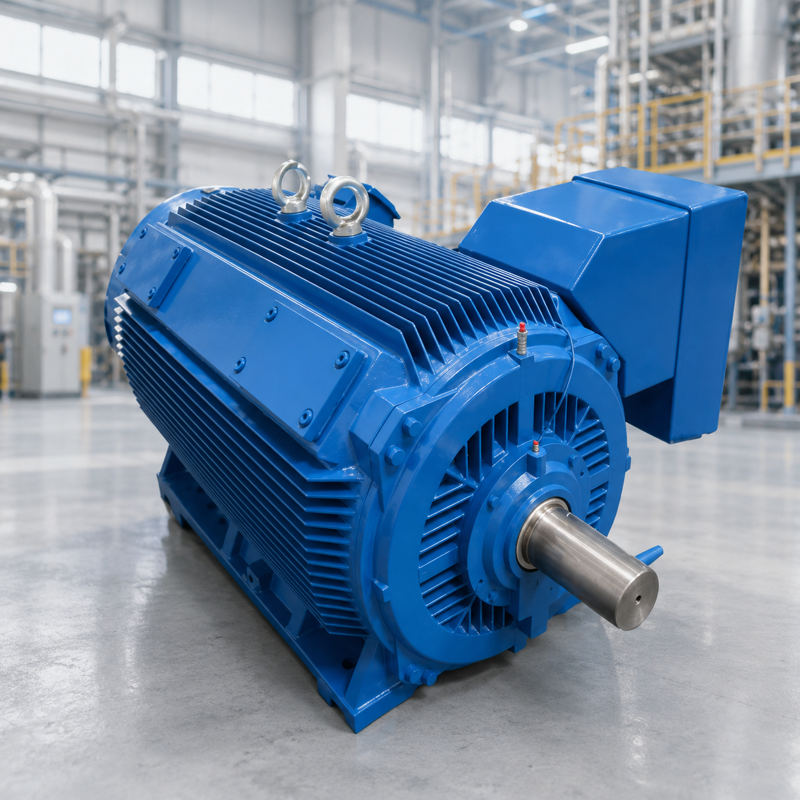
If bulk procurement of AC motor types is in your plan, the Y2‑series asynchronous motor (center height H80‑355 mm) brings outstanding value. This totally‑enclosed, self‑fan‑cooled squirrel‑cage three‑phase asynchronous motor serves general low‑voltage applications. Upgraded from proven Y‑series AC motor types, the Y2 series achieves higher power output, greater starting torque, IP54 protection grade and Class‑F insulation for enhanced reliability. Equipped with low‑noise design and IC411 cooling system, it complies with IEC standards for installation dimensions and power ratings.
For enterprises sourcing premium AC motor types, the Y2‑series represents a sturdy, efficient and cost‑effective option well‑suited for bulk industrial and commercial orders. Its upgraded specifications and high reliability make it a worthwhile investment to sustain production workflows and lower long‑term maintenance expenses。
Related Posts

NORD UNIVERSAL SMI Worm Gearmotor (Low Voltage)
Jua 27, 2026
NORD MAXXDRIVE® Parallel Gear Unit (Standard Model)
Jua 26, 2026
SIEMENS Industrial Low-Voltage Helical Gearmotor
Jua 26, 2026