











Asynchronous vs Synchronous Motors: What's the Difference?
Electric motors turn electrical energy into mechanical energy to drive mechanical equipment. AC motors fall into two main groups: synchronous motors and asynchronous motors. Though both use a stator‑produced rotating magnetic field (RMF), their operation and performance vary greatly.
Unlike DC motors that rely on magnetic force acting on current‑carrying conductors, AC motors run on rotating magnetic fields. Stator windings fed with AC supply create a rotating magnetic field spinning around the rotor. Slip describes the speed gap between the stator rotating field and the rotor. Zero slip means rotor speed matches stator field speed, defining a synchronous motor. Visible speed difference between stator field and rotor equals slip, which is the key feature of asynchronous motors.
Synchronous motors rotate at synchronous speed, exactly matching the speed of the stator rotating magnetic field. Its stator generates RMF with AC input. The rotor builds its own magnetic field either via external DC power through slip rings or built‑in permanent magnets. Rotor magnetic poles equal or multiply stator pole counts. Once energized, rotor magnetic field locks with stator RMF and spins at identical speed. Synchronous speed depends only on supply frequency and stator winding pole number, so load changes will not alter motor speed. Speed adjustment can only be achieved by modifying supply frequency. 8‑to‑40‑pole synchronous motors are widely available. Synchronous motors deliver high efficiency and support power factor correction, yet they come with higher cost and suit ultra‑low‑speed working conditions.
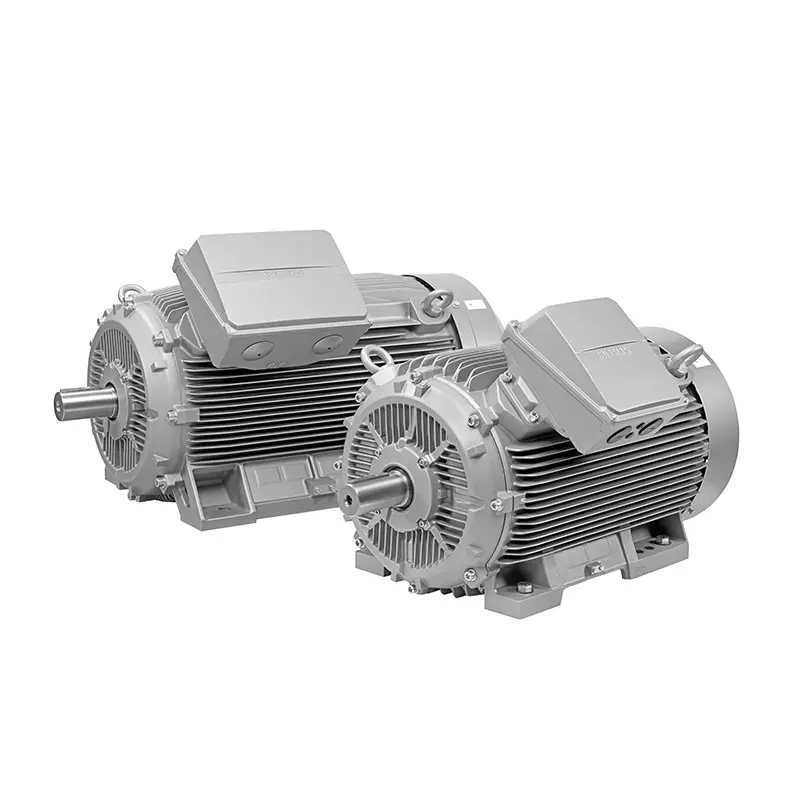
Asynchronous motors, also known as induction motors, always run slower than the stator rotating magnetic field due to slip. Their rotors adopt either squirrel‑cage type or wound‑rotor structure. Squirrel‑cage rotors consist of heavy copper bars short‑circuited by end conductive rings. Wound rotors carry multiple windings stacked on laminated steel cores. The stator RMF induces electric current inside the rotor, and this induced current generates the rotor magnetic field. Based on electromagnetic induction principle, induction motors can never reach true synchronous speed, and actual speed relates to motor slip rate. YB2 explosion‑proof asynchronous AC motor is a typical industry model. Asynchronous motors are low‑cost, easy‑to‑operate and fit high‑speed variable‑speed applications.
To sum up, synchronous motors offer better efficiency with higher cost for ultra‑low‑speed scenarios and power factor correction. Induction motors are economical and user‑friendly for high‑speed variable‑speed tasks. Feel free to contact us for more product options, including permanent magnet synchronous motors, low‑voltage squirrel‑cage motors and other variants.
Related Posts

NORD UNIVERSAL SMI Worm Gearmotor (Low Voltage)
Jua 27, 2026
NORD MAXXDRIVE® Parallel Gear Unit (Standard Model)
Jua 26, 2026
SIEMENS Industrial Low-Voltage Helical Gearmotor
Jua 26, 2026