











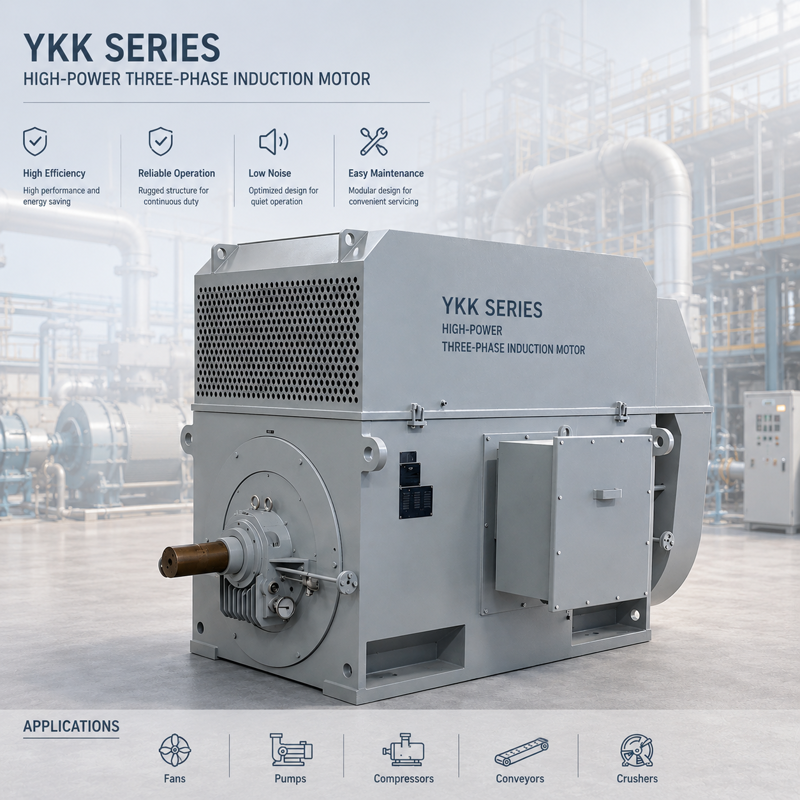
A C Electric Motors: How They Operate and Key Components
An A C electric motor is an essential piece of machinery used in various industrial, commercial, and residential applications. It consists of two main components: the stator, the stationary outer part, and the rotor, the rotating inner part connected to the motor shaft. Both of these components generate rotating magnetic fields, which are fundamental for the motor's operation. The stator’s rotating magnetic field is produced by alternating current flowing through its windings.
In an A C electric motor, the stator winding serves a dual purpose, functioning as both the armature and the field winding. When A C voltage is applied to the stator, it creates a rotating magnetic field that moves at a synchronous speed. This field induces a voltage in both the stator and rotor windings, enabling the motor to operate.
Types of A C Electric Motors
A C electric motors come in various types, each designed for specific applications. These include single-phase, three-phase, brake, synchronous, asynchronous, customized, and two-speed or three-speed motors. The main difference between these motors lies in their intended use and the electrical supply they require.
Residential applications typically use single-phase or double-phase power. Industrial applications, on the other hand, commonly use three-phase power. This distinction between electrical supply is a key factor that sets apart industrial A C electric motors from residential ones.
Most A C electric motors are induction motors, meaning they generate torque through electromagnetic induction. The magnetic field generated by the stator induces current in the rotor, which creates torque and initiates rotation.
Starting the A C Electric Motor
An A C electric motor can be started using various methods depending on the application and motor type. These starting methods control the power supplied to the motor, enabling smoother startups and preventing electrical and mechanical damage.
Contactor or Manual Starter
A contactor allows easy control of the motor’s power by toggling it on and off. A manual starter gives operators direct control, with a manual switch to regulate power.
Star-Delta Starters
This method reduces the initial voltage supplied to the motor during startup. Initially, the stator windings are connected in a star (Y) configuration, reducing the starting current. Once the motor reaches a certain speed, the windings are switched to a delta (Δ) configuration to allow full voltage.
Auto-Transformer Starter
This starter also limits the initial current by reducing the voltage applied to the stator at startup. The key advantage is that the torque and current can be adjusted according to the required settings using different tap connections.
Rotor Impedance Starter
This starter connects directly to the rotor through slip rings and brushes. Initially, it sets the rotor’s resistance to its maximum, which decreases as the motor accelerates. While effective, rotor impedance starters tend to be bulky and costly.
Soft Starters
These devices provide a smooth and gradual start and stop, reducing mechanical stress on the motor and connected equipment. This is particularly useful in applications where reducing wear and tear is a priority.
Key Components of A C Electric Motors
Stator
The stator is responsible for generating the rotating magnetic field essential for the motor’s operation. It consists of a metal core, coils of wire, and interconnections. Some motors use a squirrel cage design for the rotor, which is a common feature in A C electric motors. Electricity is supplied directly to the stator’s coils, which are wound with copper wire, creating the magnetic field needed to induce current in the rotor.
In three-phase A C electric motors, the stator consists of three-phase windings that are positioned 120° apart. These windings are wound on a laminated iron core and play a key role in ensuring smooth and continuous motor operation.
Rotor
Unlike D C motors, the rotor in an A C electric motor doesn’t have a direct connection to the external power source. Instead, it receives its power from the stator’s rotating magnetic field. In a three-phase induction motor, the rotor can be of two types:
Squirrel Cage Rotor
The squirrel cage rotor is composed of bars and end rings that are typically made of aluminum or copper. As the magnetic field fluctuates in the stator, it induces a current in the rotor bars, causing them to rotate and produce motion. The rotor does not rotate at the same frequency as the A C current, creating a "slip" or difference in speed, which is essential for motion.
Wound Rotor (Slip Ring) Motor
This type of rotor has a laminated cylindrical core wound with wire, similar to the stator. The ends of these wires are connected to slip rings mounted on the motor shaft. The slip rings provide electrical connection to brushes, allowing for control of the motor’s speed and torque. Wound motors offer the advantage of precise control over the motor's performance, as the speed and torque can be fine-tuned using the slip rings.
Squirrel Cage Rotor Operation
In a squirrel cage motor, the rotor bars interact with the stator’s electromagnetic field (EMF). As the current in the stator fluctuates, the EMF changes accordingly, inducing a current in the rotor and causing it to rotate. The key aspect of this operation is that the rotor does not rotate at the exact frequency of the A C current, continuously attempting to "catch up" with the stator’s magnetic field. If the rotor were to match the frequency of the A C current, it would stop rotating, and no motion would be generated.
Wound Rotor and Speed Control
Wound rotors offer additional flexibility for speed control. These motors are asynchronous, meaning the rotor and stator do not operate at the same speed, leading to "slippage." As the motor runs, this slippage reduces the stator’s effective field strength, providing precise control over torque, rotation speed, and overall motor performance. This capability makes wound rotor motors ideal for applications requiring careful adjustment of motor speed and torque.
Conclusion
A C electric motors are a versatile and widely used component in many industries. Their ability to generate torque through electromagnetic induction and their variety of designs—such as squirrel cage and wound rotor—make them suitable for a range of applications. Whether using a simple single-phase motor for residential purposes or a three-phase induction motor for heavy industrial use, A C electric motors provide reliable, efficient performance. Their key components, including the stator and rotor, work together to convert electrical energy into mechanical motion, making them integral to the functioning of countless machines and devices.
If you're considering bulk procurement of A C motors, the Y2 series asynchronous motor (with a center height H80-355mm) offers exceptional value. This fully enclosed, self-fan cooled squirrel cage three-phase asynchronous motor is designed for general-purpose low-voltage use. Building on the foundation of the reliable Y series A C motors, the Y2 series delivers higher power, increased starting torque, and an upgraded IP54 protection class and F insulation class for greater reliability. With a noise-reduced design and an IC411 cooling method, this motor ensures optimal performance and efficiency, meeting IEC standard specifications for power levels and installation sizes.
For businesses looking to source high-quality A C motors, the Y2 series provides a robust, efficient, and cost-effective solution, making it an ideal choice for bulk purchases in industrial and commercial applications. With its improved features and high reliability, the Y2 series is a smart investment that will support your operations and reduce long-term maintenance costs。
Related Posts

NORD UNIVERSAL SMI Worm Gearmotor (Low Voltage)
Jua 27, 2026
NORD MAXXDRIVE® Parallel Gear Unit (Standard Model)
Jua 26, 2026
SIEMENS Industrial Low-Voltage Helical Gearmotor
Jua 26, 2026