











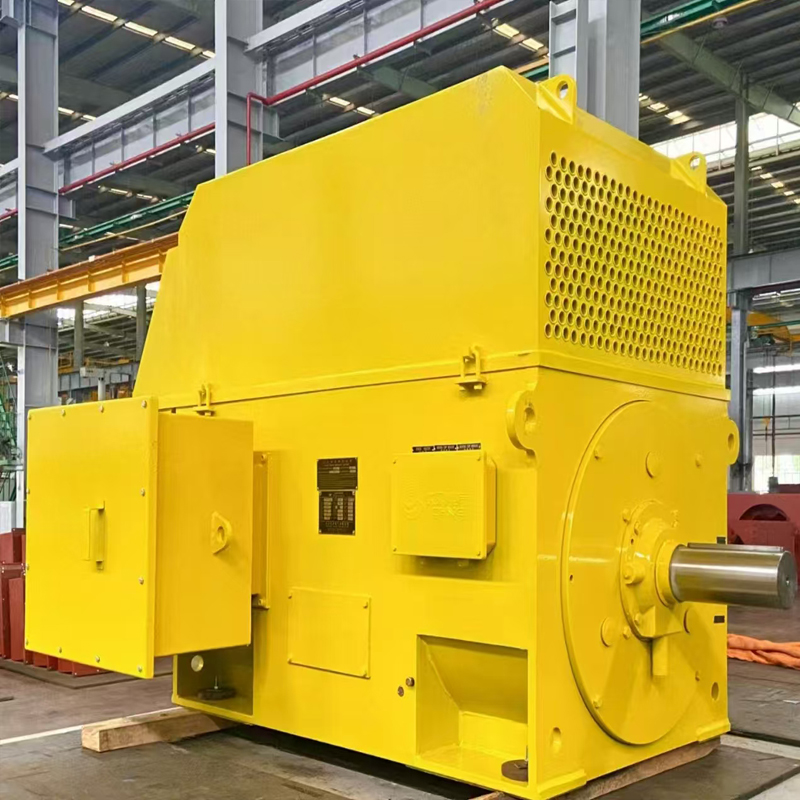
Research on Structure and Technical Advantages of PMSM
A Permanent Magnet Synchronous Motor (PMSM) features three-phase stator windings that create a rotating magnetic field, while its rotor is fitted with permanent magnets to establish a steady magnetic field. The rotor magnetic field synchronizes with the rotating stator field, enabling the rotor to revolve at synchronous speed. Boasting high efficiency, superior power density, accurate speed regulation, low noise and compact structure thanks to the removal of rotor windings, PMSMs are widely adopted in electric vehicles and high-precision mechanical equipment.
PMSMs are characterized by simple construction, small footprint, high efficiency and high power factor. Currently, PMSMs have delivered outstanding performance in medium and low voltage motor applications across metallurgy, ceramics, rubber, petroleum, textile and other sectors, with abundant design and operational experience accumulated continuously.
Structure
A PMSM mainly consists of the rotor, end covers and stator. Its stator structure bears strong similarities to that of conventional induction motors. The primary structural difference lies in the rotor: high-performance permanent magnet poles are mounted on the rotor core. Based on the mounting position of permanent magnets, PMSMs are generally classified into surface-mounted rotor type and interior rotor type.
The arrangement of permanent magnets exerts a vital impact on motor performance.
- Surface-mounted rotor structure: Permanent magnets are attached to the outer surface of the rotor core. This structure is simple, yet generates minimal asynchronous torque. It only fits scenarios with low starting requirements and is rarely deployed in practice.
- Interior rotor structure: Permanent magnets are embedded within the iron core between squirrel-cage bars and the rotating shaft, offering excellent starting capability. Most commercially available PMSMs adopt this configuration.
Working Principle
The startup and operation of a PMSM rely on magnetic field interaction among stator windings, rotor squirrel-cage windings and permanent magnets.
When the motor is static, three-phase symmetrical current supplied to stator windings generates a rotating stator magnetic field. Relative rotation between this field and the stationary rotor induces currents in squirrel-cage windings, forming a rotating rotor magnetic field. Interaction between the two rotating magnetic fields produces asynchronous torque to accelerate the rotor from standstill. During acceleration, the rotor permanent magnetic field rotates at a different speed from the stator rotating field, generating alternating torque.
Once the rotor speed approaches synchronous speed, the rotational speeds of the rotor permanent magnetic field and stator rotating field become nearly identical, with the stator field slightly faster. Their interaction generates pull-in torque to bring the rotor into synchronous operation. Under synchronous operation, no current flows through rotor windings. Only the permanent magnets on the rotor produce a magnetic field, which interacts with the stator rotating field to create driving torque.
In summary, PMSMs initiate rotation relying on asynchronous torque from rotor squirrel-cage windings. After synchronization, rotor windings cease functioning, and driving torque is generated by mutual action between the permanent magnet field and stator winding magnetic field.
Advantages
1. Low Loss & Low Temperature Rise
The magnetic field of a PMSM is supplied by permanent magnets, eliminating excitation copper loss induced by excitation current. No current flows inside the rotor during operation, greatly lowering motor temperature rise. Under identical load conditions, its temperature rise can be over 20K lower compared with alternative motors.
2. High Power Factor
PMSMs maintain a high power factor independent of pole numbers, which can approach 1 under full-load conditions. Versus asynchronous motors, PMSMs draw smaller stator current, cutting stator copper loss and further lifting efficiency. As pole quantity increases, the power factor of asynchronous motors declines gradually.
Benefiting from the high power factor of PMSMs, the required power supply capacity can be reduced theoretically. Meanwhile, lower specifications for matching switchgears and cables can be selected.
3. High Efficiency
Compared with asynchronous motors, PMSMs retain much higher efficiency under light loads and feature a broad high-efficiency operating range. Efficiency exceeds 90% within 25%~120% rated load. The rated efficiency of PMSMs can meet Class 1 energy efficiency standards specified in current national codes, representing its core energy-saving advantage over asynchronous motors.
In practical operation, motors seldom run under full load. On one hand, engineers select motor power according to extreme load working conditions, which occur infrequently. On the other hand, motor manufacturers reserve extra power margin based on user demand to avoid burnout under abnormal conditions and guarantee operational reliability.
As a result, most motors operate below 70% rated power, especially fans and pump drive motors working frequently under light load. Asynchronous motors suffer severe efficiency drop at light loads, whereas PMSMs sustain high efficiency steadily.
4. Additional Merits
PMSMs deliver high starting torque, fast startup and strong overload capacity. Users can choose drive motors with smaller installed capacity matching actual shaft power to save energy and cut fixed asset investment.
PMSMs are easy to control and maintain constant rotational speed. Speed is only determined by power frequency and unaffected by load or voltage fluctuations, enabling stable and reliable operation. Strict synchronous rotation brings excellent dynamic response, making PMSMs suitable for variable frequency drive control.
Their mounting dimensions comply with IEC standards, enabling direct replacement of three-phase asynchronous motors. Protection grades can reach IP54 and IP55, and explosion-proof type PMSMs are available from multiple manufacturers.
Related Posts

NORD UNIVERSAL SMI Worm Gearmotor (Low Voltage)
Jua 27, 2026
NORD MAXXDRIVE® Parallel Gear Unit (Standard Model)
Jua 26, 2026
SIEMENS Industrial Low-Voltage Helical Gearmotor
Jua 26, 2026