










What Are the Advantages of Squirrel Cage Asynchronous Motor
Based on the provided reference materials, here is a comprehensive overview of the squirrel cage asynchronous motor, including its definition, working principle, structure, applications, and a detailed breakdown of its advantages and disadvantages.
What is a Squirrel Cage Asynchronous Motor?
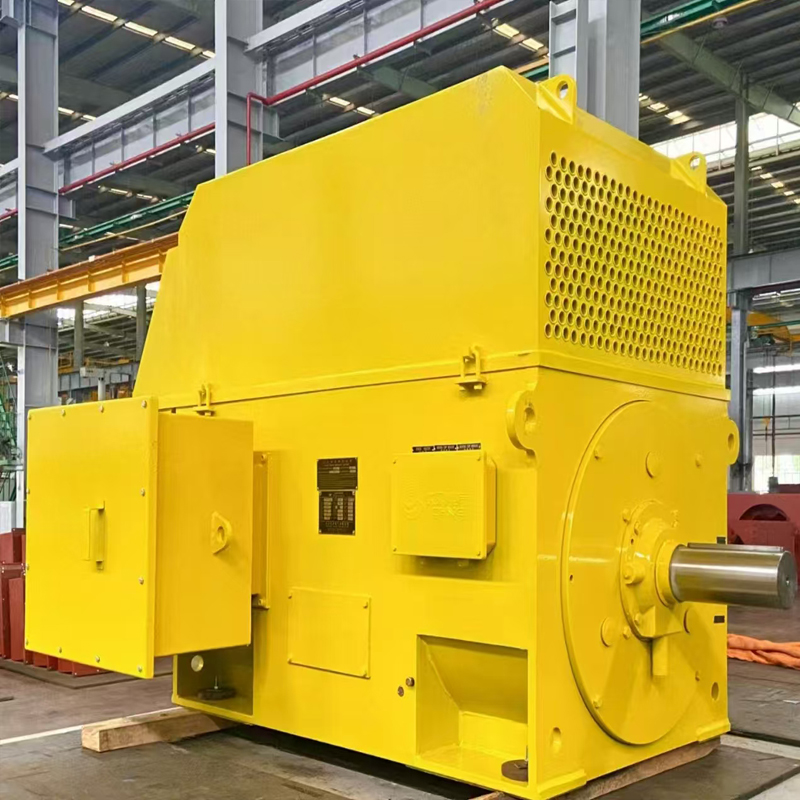
A squirrel cage asynchronous motor (also known as a squirrel cage induction motor) is the most widely used type of three-phase induction motor in both industrial and commercial sectors. It converts electrical energy into mechanical energy using the principle of electromagnetic induction. It gets its name from its rotor structure, which consists of conductive bars (usually aluminum or copper) short-circuited at both ends by rings, closely resembling a "squirrel cage."
Principle of Operation
The motor operates on the interaction between magnetic fields. When three-phase AC power is supplied to the stator winding, it generates a rotating magnetic field at a speed known as the synchronous speed. This rotating field cuts across the stationary rotor bars, inducing a voltage and causing short-circuit currents to flow within the rotor. These rotor currents generate their own magnetic field, which interacts with the stator's field to produce torque.
Because the motor is "asynchronous," the rotor must rotate at a speed slightly lower than the synchronous speed (a difference known as the slip rate). If the rotor were to catch up to the rotating magnetic field, there would be no relative motion, no induced current, and zero torque. Thus, the rotor constantly follows the rotating field at a slightly lower speed to maintain continuous tangential force.
Motor Structure
The motor consists of several key components:
- Stator: The stationary part featuring a laminated iron core and three-phase windings spaced 120° apart. It provides a low-reluctance path for magnetic flux.
- Rotor: The rotating part that delivers mechanical output. Its core is laminated to prevent eddy current and hysteresis losses. The embedded conductive bars are often skewed to prevent cogging and reduce magnetic hum.
- Fan: Attached to the rear of the rotor to dissipate heat and maintain optimal operating temperatures.
- Bearings: Support the rotating shaft, reduce friction, and ensure smooth rotation.
Applications
Due to their robustness and constant-speed characteristics, squirrel cage asynchronous motors are ubiquitous. Common applications include:
- Centrifugal pumps and industrial compressors
- Conveyor belts and industrial drives
- Large blowers, fans, and ventilation systems
- Machine tools, lathes, and printing equipment
- Household appliances (e.g., washing machines, refrigerators, and air conditioners)
Advantages of Squirrel Cage Asynchronous Motors
- Low Cost & Simple Construction: They are cheaper to manufacture than slip-ring or DC motors due to the absence of complex parts like commutators, slip rings, and carbon brushes.
- Low Maintenance: The rugged, brushless design eliminates the wear and tear associated with sliding contacts, drastically reducing maintenance costs and downtime.
- High Efficiency & Better Cooling: They require less conductor material, resulting in lower copper losses and higher operational efficiency. They also run cooler compared to slip-ring motors.
- Explosion-Proof: The absence of brushes and slip rings eliminates the risk of sparking, making them safe for hazardous, polluted, or explosive environments.
- Good Speed Regulation: They operate at a nearly constant speed and possess a high overload capacity.
- Self-Starting: Three-phase versions are inherently self-starting without needing auxiliary starting mechanisms.
Disadvantages of Squirrel Cage Asynchronous Motors
- Poor Starting Torque & High Starting Current: The starting torque is typically only 1.5 to 2 times the full-load torque, while the starting current can surge to 5 to 9 times the full-load current. This can cause voltage drops in the power system.
- Lack of Native Speed Control: Traditionally, their speed cannot be easily controlled because the rotor circuit is permanently short-circuited and lacks external resistance. (Note: Modern Variable Frequency Drives (VFDs) have largely mitigated this issue by allowing smooth speed control through frequency adjustment).
- Sensitivity to Voltage Fluctuations: A drop in supply voltage causes the motor to draw more current, while voltage surges can saturate the magnetic components.
- Low Power Factor at Light Loads: They draw a large magnetizing current, resulting in a poor power factor during no-load or light-load operations, which reduces overall system efficiency.
- High Energy Loss During Starting: Frequent starting can lead to significant total energy losses and may cause rotor bar damage (e.g., broken bars) due to thermal stress.
Related Posts

NORD UNIVERSAL SMI Worm Gearmotor (Low Voltage)
Jua 27, 2026
NORD MAXXDRIVE® Parallel Gear Unit (Standard Model)
Jua 26, 2026
SIEMENS Industrial Low-Voltage Helical Gearmotor
Jua 26, 2026