











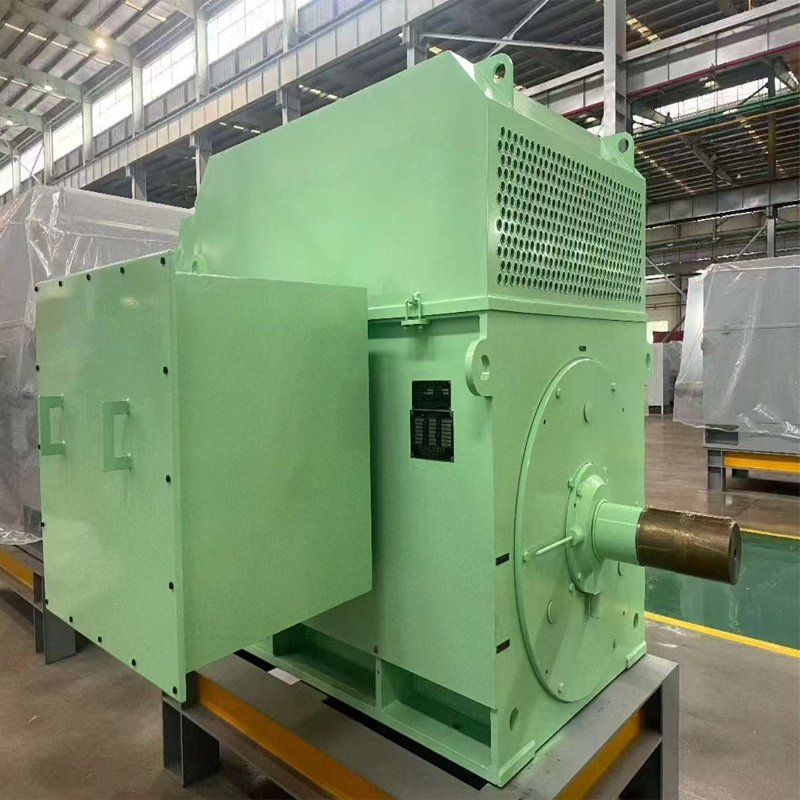
How AC Induction Motors Work and Their Key Components
The AC induction motor stands as one of the most critical and ubiquitous pieces of machinery in modern industry, commerce, and residential life. At its core, this device converts electrical energy into mechanical motion through the elegant principle of electromagnetic induction. Its enduring popularity is built upon a foundation of robust design, high reliability, and exceptional efficiency, making it the default choice for countless applications.
Core Operating Principle
The fundamental operation of an AC induction motor relies on the interaction between two primary components: the stationary stator and the rotating rotor. When alternating current is supplied to the stator windings, it generates a rotating magnetic field. This magnetic field sweeps across the rotor, and through the principle of electromagnetic induction, induces an electric current within the rotor's conductors. The interaction between this induced current and the stator's magnetic field creates an electromagnetic torque, compelling the rotor to spin. Crucially, the rotor always rotates at a speed slightly slower than the stator's magnetic field—a difference known as "slip." This slip is essential, as it maintains the relative motion needed to continuously induce current and sustain rotation.
Key Components and Rotor Designs
The performance and application of an AC induction motor are largely defined by its rotor construction. There are two primary designs:
- Squirrel Cage Rotor: This is the most common and robust design. The rotor consists of a cylinder of solid metal bars (typically aluminum or copper) that are short-circuited at both ends by conductive rings, resembling a hamster wheel. This simple, brushless construction makes squirrel cage motors incredibly durable, low-maintenance, and cost-effective. They are the workhorses for general-purpose applications like fans, pumps, and compressors.
- Wound Rotor (Slip Ring): In this design, the rotor features a laminated core with wire windings similar to the stator. These windings are connected to slip rings on the motor shaft, allowing for an external electrical connection via brushes. This configuration provides precise control over the motor's speed and torque by introducing external resistance into the rotor circuit. While more complex and expensive, wound rotor motors are ideal for applications requiring high starting torque or variable speed control, such as cranes and hoists.
Starting Methods for Optimal Performance
To prevent excessive inrush current and mechanical stress, AC induction motors often employ specialized starting methods:
- Direct-On-Line (DOL) & Manual Starters: Simple methods for smaller motors, connecting the motor directly to the power supply.
- Star-Delta Starters: Initially connect the stator windings in a "star" configuration to reduce starting voltage and current, then switch to a "delta" configuration for full-power operation.
- Auto-Transformer Starters: Use a transformer to reduce the voltage applied during startup, offering adjustable torque and current settings.
- Soft Starters: Electronic devices that provide a smooth, gradual ramp-up of voltage, significantly reducing mechanical wear and electrical stress on the system.
Industrial vs. Residential Applications
The type of AC induction motor used is often dictated by the available power supply. Residential and light commercial applications typically utilize single-phase induction motors. In contrast, heavy industrial environments rely on three-phase power, which naturally creates a more efficient and smoother rotating magnetic field, making three-phase induction motors the standard for demanding industrial drives.
Recommended Solution: The Y2 Series Asynchronous Motor
For businesses seeking a reliable and high-performance AC induction motor for bulk procurement, the Y2 Series Asynchronous Motor represents an exceptional value. Designed as an advanced successor to the classic Y series, this fully enclosed, self-fan cooled, squirrel cage three-phase motor is engineered for general-purpose, low-voltage industrial use.
Key advantages of the Y2 Series include:
- Enhanced Performance: Delivers higher power output and increased starting torque.
- Superior Protection: Features an upgraded IP54 protection class and F-class insulation for greater durability and reliability in harsh environments.
- Optimized Design: Incorporates a noise-reduced design and an IC411 cooling method for quieter, more efficient operation.
- Standard Compliance: Meets all IEC standard specifications for power levels and installation dimensions, ensuring easy integration and replacement.
- The Y2 series provides a robust, efficient, and cost-effective solution that reduces long-term maintenance costs, making it a smart investment for supporting continuous industrial and commercial operations.
Related Posts

NORD UNIVERSAL SMI Worm Gearmotor (Low Voltage)
Jua 27, 2026
NORD MAXXDRIVE® Parallel Gear Unit (Standard Model)
Jua 26, 2026
SIEMENS Industrial Low-Voltage Helical Gearmotor
Jua 26, 2026