











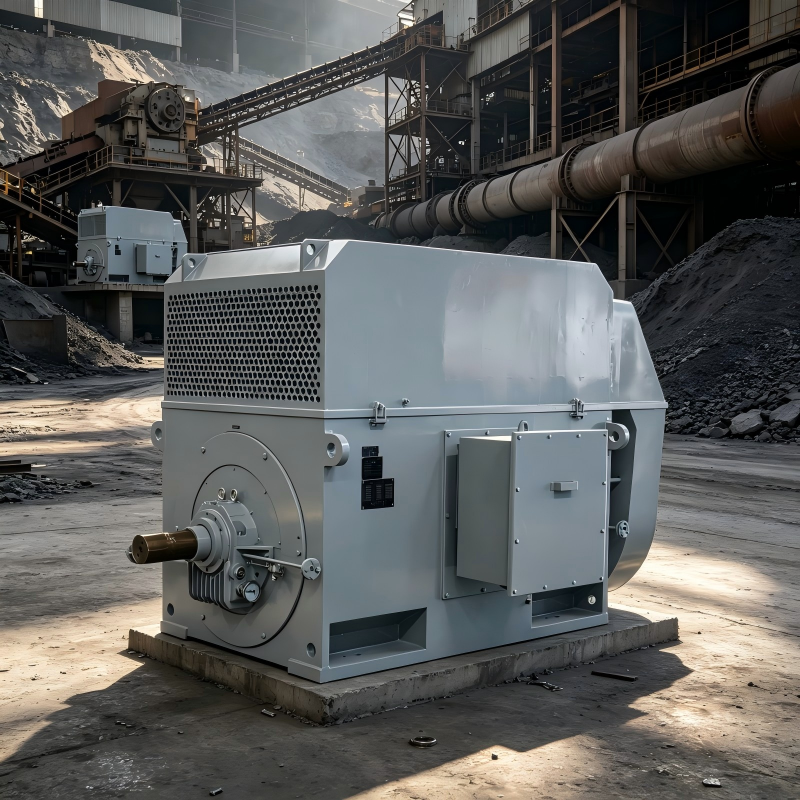
Understanding Synchronous Motors: Principles, Structures, and Industrial Applications
1. Core Operating Principles
Unlike a standard Induction Motor, the Synchronous Motor operates with its rotor speed locked precisely to the frequency of the stator's rotating magnetic field. This ensures zero slip, providing constant speed regardless of load variations. When engineered as a High Efficiency Motor, these units play a critical role in reducing industrial power consumption.
During operation, the stator is energized by a three-phase supply, while the rotor is energized by a DC source or permanent magnets. This magnetic coupling ensures the rotor stays in perfect synchronization. Beyond motor operation, these machines can be configured as a Synchronous Generator or utilized as a Synchronous Condenser to provide reactive power compensation and improve power factor across electrical grids.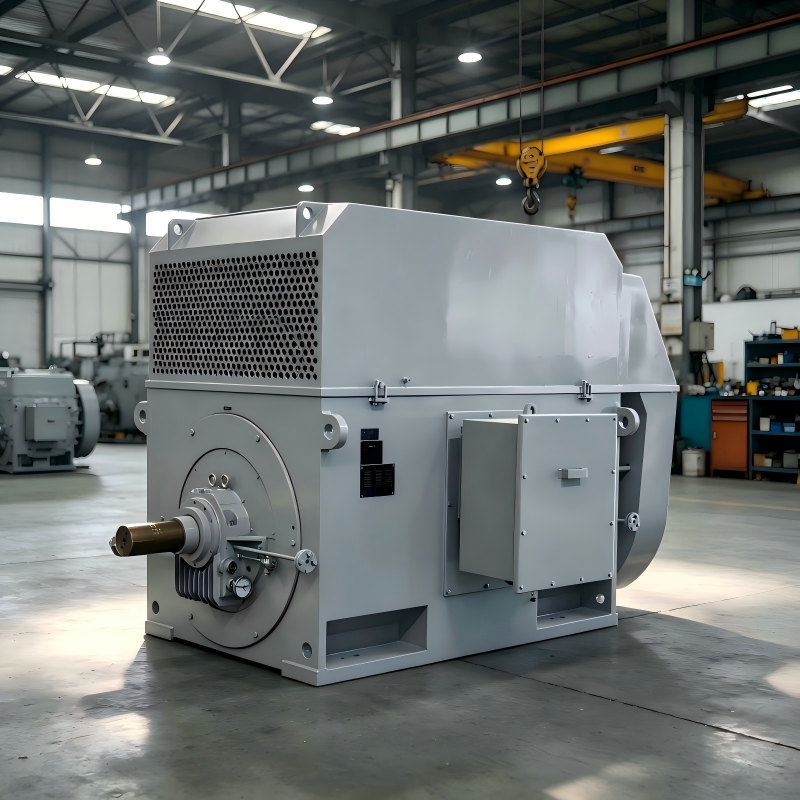
2. Diverse Motor Architectures
Depending on specific industrial requirements, synchronous and asynchronous technologies offer a wide range of solutions:
- Permanent Magnet Technology: The Permanent Magnet Synchronous Motor (PMSM) has gained significant traction due to its high power density and lack of a complex excitation system.
- Asynchronous Foundations: The most ubiquitous solution in industrial settings remains the Induction Motor, particularly the Three-Phase Asynchronous Motor. These are categorized by their rotor design:Squirrel Cage Motor: Known for its rugged construction and reliability, this is the standard for general-purpose applications.Wound Rotor Induction Motor / Slip Ring Motor: By utilizing external resistance, these motors allow for superior starting torque control, making them ideal for high-inertia loads.
- Specialized Environments: For hazardous locations, the Explosion-Proof Motor ensures safety in chemical and petrochemical facilities. Meanwhile, the Vertical Motor design is specifically engineered for pump systems and vertical-mount industrial machinery.
3. Voltage and Power Configurations
Selecting the correct voltage class is critical for optimizing system performance:
- High Voltage Motor: Often categorized as a Large Electric Motor, these units are essential for driving high-capacity compressors, mine hoists, and heavy-duty fans.
- Low Voltage Motor: These provide flexible, cost-effective solutions for a vast array of mid-to-small-scale machinery and automation lines.
4. Summary and Selection Guide
Choosing the right motor is vital for operational efficiency. If your application demands absolute speed consistency and power factor correction, the Synchronous Motor is the gold standard. For general industrial drives where simplicity and ease of maintenance are prioritized, an Induction Motor—such as a Squirrel Cage Motor or a Slip Ring Motor—remains the go-to solution.
As Industry 4.0 evolves, the demand for High Efficiency Motor solutions—whether in the form of a specialized Vertical Motor or a powerful Large Electric Motor—continues to drive innovation in power transmission technology.
Related Posts

NORD UNIVERSAL SMI Worm Gearmotor (Low Voltage)
Jua 27, 2026
NORD MAXXDRIVE® Parallel Gear Unit (Standard Model)
Jua 26, 2026
SIEMENS Industrial Low-Voltage Helical Gearmotor
Jua 26, 2026